

Bridging the gap between the science and service of HIV prevention requires strategic and systematic approaches for transferring effective research-based HIV prevention interventions to community AIDS service providers (Jeffrey A. et al., 2000). There is a need for mechanisms that would quickly transfer research-based HIV prevention methods to community-led HIV prevention service providers, where active engagement between researchers and service agencies could lead to more successful program uptake.
Monitoring inequalities in viral suppression
HIV remains a major public health issue that affects millions of people worldwide despite the world’s enhanced efforts on the fast track strategy to end the AIDS epidemic by 2030. As countries move towards the UNAIDS’s 95-95-95 targets and with strong evidence that undetectable equals untransmittable, it is increasingly considered vital to assess whether those with HIV are receiving antiretroviral therapy achieve viral suppression particularly during the time of commemorating the 2021’s World AIDS Day where different stakeholders reflect on their desired achievements.
December first of every year, the world celebrates World AIDS Day with a special focus on reaching people left behind. The theme of World AIDS Day 2021 is “End inequalities. End AIDS” as WHO and its partners continue to highlight the growing inequalities in access to essential HIV services, including viral suppression. Disparities in access, HIV infections, and AIDS-related deaths resulting from inequalities have been observed from time to time.
The National Institutes of Health’s global estimates of viral suppression in children and adolescents, as compared to adults, reveal slower progress towards approaching the global target of 95% viral suppression. In 2014, the Joint United Nations Programme on HIV/AIDS (UNAIDS) set a goal of 95% of all people with HIV who are taking ART achieving viral suppression by 2030. This study thus calls for substantial efforts to reach the global viral suppression target for children and adolescents. UNAIDS claims that people with HIV who achieve viral suppression protect their immune health and prevent transmitting HIV to others.
Nevertheless, there are significant efforts in achieving this goal amongst countries, including the United Republic of Tanzania which is one of a few countries that account for 89% of all new HIV infections.
Tanzania through PEPFAR and USAID community-led monitoring supported projects are expected to improve implementation of the new Global AIDS Strategy 2021–2026, End Inequalities, End AIDS, is a bold approach that uses an inequalities lens to close the gaps preventing progress to end AIDS. Civil societies including the network of PLHIV have been supported to establish community-led monitoring (CLM) system to identify and report any potential HIV-related issues and then collaborate with local government authorities to set feasible approaches to address them. There are several potentials of CLM, especially in its capacity to transform community-led infrastructures for better services as outlined in the Global AIDS Strategy. These potentials include the ability to do the following: –
- The support and use of community-generated data to customize solutions to the needs of individuals living with HIV and key populations, including young key populations, is essential.
- The most comprehensive data collection strategy, as well as a publication of reliable and strategic information, including the capacity to methodically monitor progress, and track gaps.
The 2021 World AIDS Day report considers CLM as one of an effective package to measure improvement in HIV-related service provision. In this report, Community-led monitoring is becoming a fundamental mechanism for increasing accountability towards empowering networks of key populations, affected groups, or other community entities to systematically and routinely collect and analyze qualitative and quantitative data on HIV service delivery.
The Global AIDS Strategy 2021–2026
Building on the fast track strategy, which is an agenda for quickening the pace of implementation, focus, and change at the global, regional, country, province, district, and city levels, the current Global AIDS Strategy uses an inequalities lens to close the gaps that prevent the progress to end AIDS and sets out bold new targets and policies to be reached by 2025, hence propelling new energy and commitment to ending AIDS.
The world continues to witness history’s most significant opportunity to end the AIDS epidemic as a public health threat which has been provided by a combination of impressive advances in science, political commitments and community activism, human rights advances, global solidarity with accompanying resources.
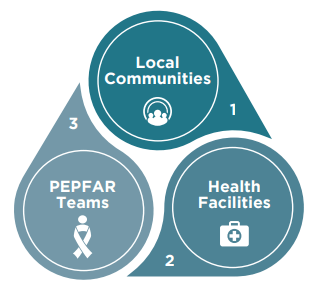
In recent times, community-led monitoring is seen being built into an increasing number of HIV programs in Africa, Asia, and Latin America, as more evidence emerges of the value and impact of community-led monitoring. According to PEPFAR, approaches, and principles on community-led monitoring allow communities to design, implement and conduct routine, ongoing monitoring of the quality and accessibility of HIV treatment and prevention services. On that account, PEPFAR-supported CLM should therefore be:
- productive, collaborative, respectful, and solutions-oriented.
- conducted by independent, local community organizations.
- tailored to the needs identified by local communities, with communities determining the scope.
- action-oriented with an associated follow-up process with the health facility for corrective public health action, including community advocacy to improve service outcomes
- routine, with follow up and continuous improvement.
- triangulated with other PEPFAR data streams.
For further reading regarding solutions and best practices in community-led monitoring, click here.
.
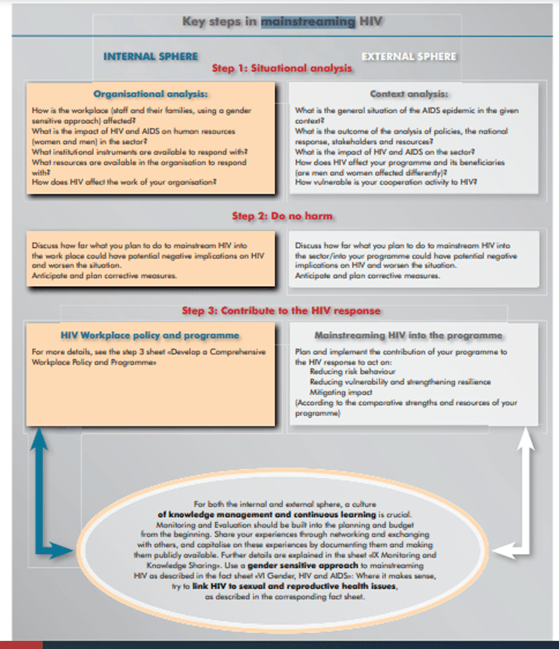
Mainstreaming HIV into international cooperation work remains one of the most important strategies for such a multisectoral response. Through several steps, mainstreaming of HIV can take place in cooperation activities in various epidemiological contexts with various aid modalities – through bilateral cooperation, humanitarian aid, and multilateral aid.
Therefore, mainstreaming community-led monitoring into the Global AIDS Strategy, in the context of our analysis at CLM Consultants Ltd, is considered potential to facilitate the journey to achieving the UNAIDS shared vision of zero new HIV infections, zero discrimination, and zero AIDS-related deaths. The basis for our analysis and understanding is guided by the following optimistic scenarios: –
- Community-led monitoring adds vital missing perspectives and information that can be used to improve the quality and use of health services as it enables systematic documentation of experience and knowledge of service users, and for that case, if
- Community-led monitoring and the Global AIDS Strategy are put and work together, chances are higher to realize the desired UNAIDS’ 95-95-95 goals.
- Furthermore, Community-led monitoring focuses tend to remain on getting input from recipients of HIV services in a routine and systematic manner that will translate into action and change.
- Community-led monitoring helps bridge the gap between the best-laid plans of health strategies and the unruly ways in which they play out in reality.
- With community-led monitoring, community members collect information at service sites and from service recipient, followed by using such information, in partnership with health providers and program managers, to quickly resolve problems that are identified; it can also be used, when needed, for advocacy to hold governments, donors and health programs accountable for improving service accessibility and quality.




 clm-consultant.com
